

No One Solves It Alone
A web series that made me rethink parenting, medicine, and healing.

Last night, Mumbai did what Mumbai does best.
It rained endlessly.
The kind of rain that makes you cancel every other plan, sit with your family, order something warm, and look for a good show to watch together.
We started watching the web series Petro and Pritam. I had made a firm promise to myself that I would watch only two episodes and then go to bed. I take my sleep rather seriously. Usually, if I stay awake watching a series, I carry guilt the next morning.
But this time, something unusual happened.
One episode became two. Two became four. And before I realised it, we had finished the entire series in one sitting.
It was one in the night.
And surprisingly, I had no guilt.
Some stories do that to you. They entertain you, but they also leave you with thoughts that continue long after the screen goes dark.
This series did exactly that.
As a parent, I could relate to it.
As a husband, I could relate to it.
As a doctor, I could relate to it even more.
I think many of you in your thirties and forties will feel the same.
The story revolves around two completely different men trying to solve the mystery of a missing child.
One is old school. Experienced. Intuitive. Deeply rooted in his craft.
The other belongs to the modern world. Sharp with technology, data, and new-age methods.
Individually, both are brilliant.
But neither could have solved the case alone.
The case gets solved because both of them come together.
And while watching this, I had a strange feeling.
I was not watching two detectives.
I was watching medicine.
I was watching my clinic.
I was watching my own journey as a physician.
Because the longer I practice medicine, the more I realise something very important:
There is no single approach that works for every human being.
Two people can walk into my clinic with the same diagnosis.
Same reports.
Same symptoms.
Same disease label.
And yet, they may require completely different approaches.
One may improve with one line of treatment.
Another may need dietary changes.
Someone may need counselling.
Someone may need exercise.
Someone may need investigations that were never considered.
Someone may need a combination of different modalities.
And sometimes, what we learned in medical school is simply not enough.
Sometimes experience teaches us things that textbooks never can.
Sometimes modern tools become necessary.
Sometimes collaboration becomes necessary.
Sometimes another doctor’s opinion becomes necessary.
Sometimes humility becomes necessary.
The physician who believes that only his method can solve every problem often limits the possibilities of healing.
And the patient who believes that only one path exists may also miss opportunities to get better.
Healing demands openness.
It demands flexibility.
It demands curiosity.
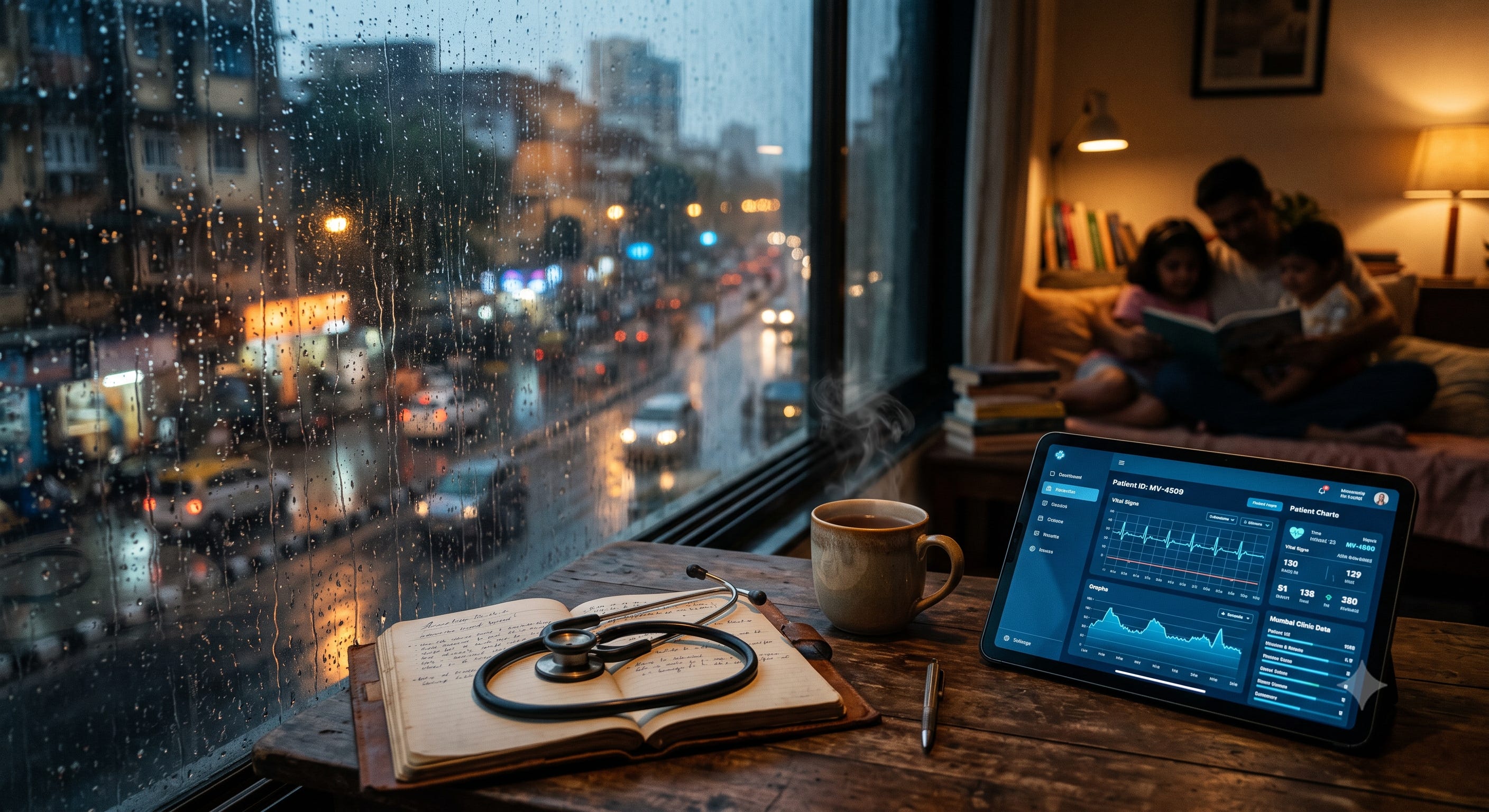
The series reminded me of this beautifully.
The old-school detective did not lose his value because technology arrived.
The modern detective did not become superior because he knew the latest tools.
Both became effective because they respected each other’s strengths.
Medicine is no different.
I often tell my patients that our loyalty should not be towards a system.
Our loyalty should be towards the patient’s well-being.
Whatever genuinely helps the patient move towards health deserves consideration.
No ego.
No rigid beliefs.
No unnecessary inhibition.
Only the sincere intention to help.
There was another layer in this series that touched me deeply.
Every person involved in solving the case carried their own personal struggles.
Their own fears.
Their own wounds.
Their own unfinished stories.
And I smiled to myself because that too is medicine.
Every doctor enters the clinic carrying his own worries.
Every patient enters the clinic carrying invisible burdens.
Every family member is fighting battles we know nothing about.
Sometimes what appears to be a physical illness is also carrying emotional pain, loneliness, guilt, fear, relationship conflicts, or exhaustion.
Human beings are complicated.
And healing is never only about the body.
Finally, there was the child.
The lost child in the story.
The series subtly raises questions about the world our children are growing up in today.
Technology.
Isolation.
Digital distractions.
Changing family dynamics.
The emotional distance that quietly enters homes without anyone noticing.
As a parent, it made me uncomfortable.
And perhaps good stories are supposed to do exactly that.
They are supposed to make us pause and ask difficult questions.
Are we truly listening to our children?
Are we present with them?
Are we understanding the pressures they are growing through?
Or are we all simply busy, connected to screens but disconnected from each other?
I went to sleep late.
I sacrificed a few hours of sleep.
But this was one of those rare nights when it felt worth it.
Because sometimes a web series is not just entertainment.
Sometimes it becomes a mirror.
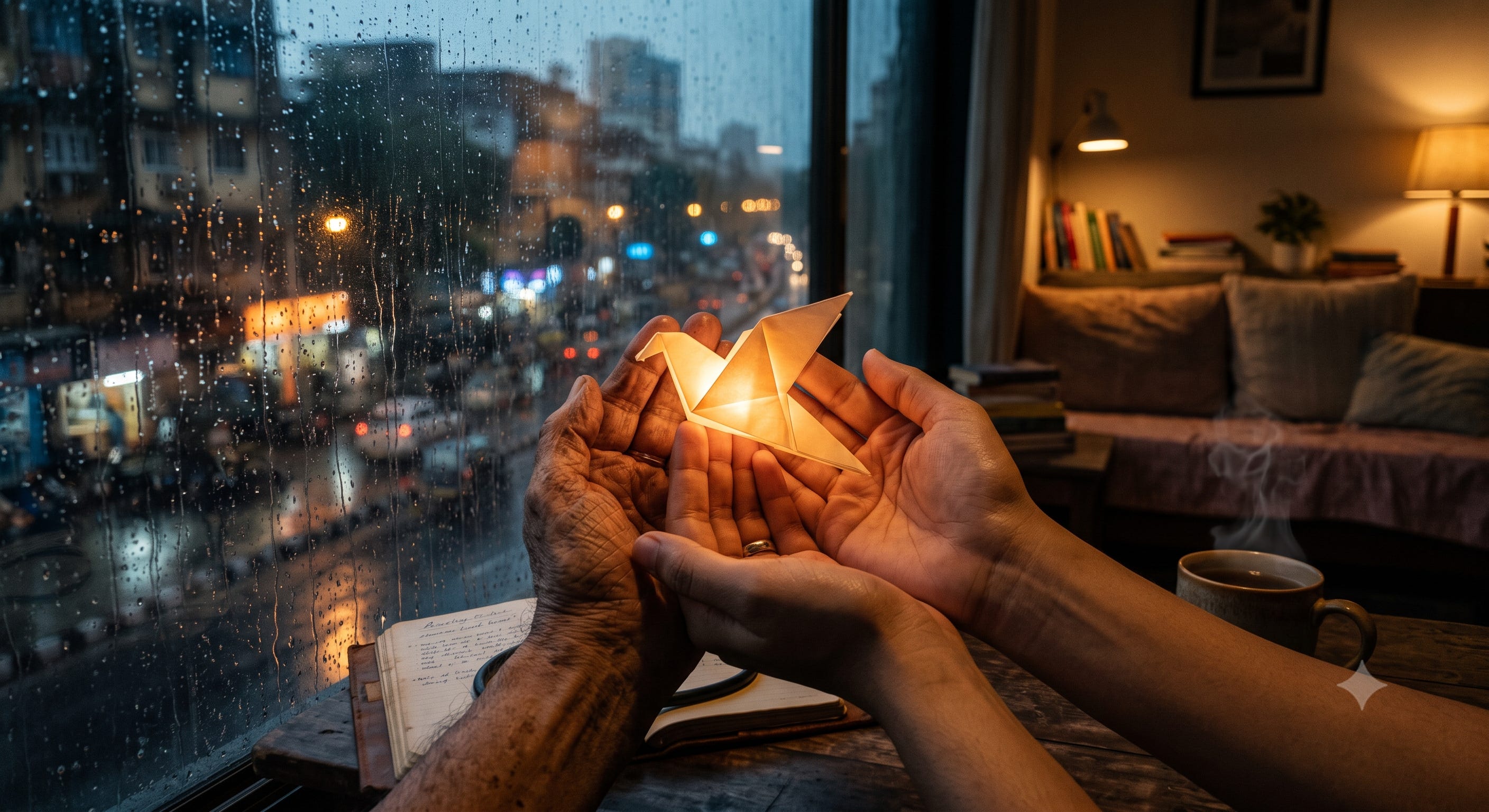
And last night, Petro and Pritam became one for me.
If you happen to watch it, do watch it not only as a suspense thriller.
Watch it as a story about partnership, openness, parenting, human struggles, and the art of solving problems together.
And when you finish it, sit quietly for a few minutes.
Reflect.
I would genuinely love to know:
What did the series teach you?